



Introduction
A golf club headcover set usually includes covers for the driver, fairway woods, hybrids, and putter. However, the exact combination depends on the golfer's club setup and the brand's product positioning.
For golfers, the right set protects valuable clubs and keeps the golf bag organized. For golf brands, a matching headcover set is also an opportunity to create a consistent product identity through materials, colors, patterns, and logo details.
A practical headcover set should cover the clubs that need individual protection first, with additional covers available according to customer needs.
Which Headcovers Should a Standard Golf Set Include?
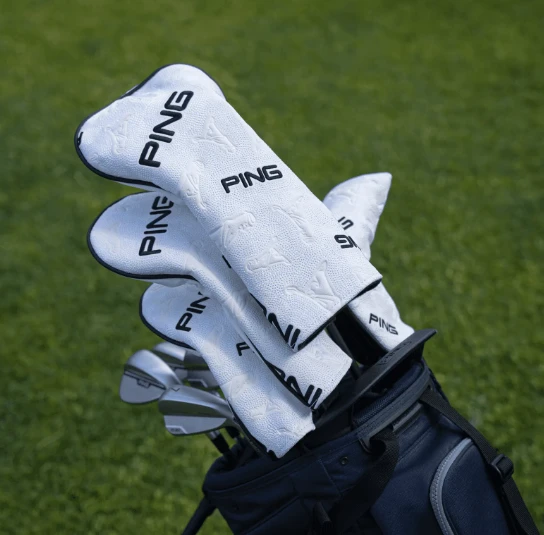
Driver Headcover
The driver headcover is usually the largest cover in a golf headcover set. It protects the driver head from scratches and impacts when clubs move inside the golf bag.
Because modern drivers can have relatively large clubheads, the cover needs sufficient internal space and a secure fit. Soft lining and suitable padding also help protect the club's finish.
Fairway Wood and Hybrid Headcovers
Fairway wood covers are commonly designed for clubs such as the 3-wood, 5-wood, and 7-wood. Hybrid covers are generally smaller and designed around the shape of hybrid clubheads.
Number or loft identification is useful because golfers may carry several similar-looking clubs. A well-designed set should make it easy to identify each club without removing every cover.
Does a Golf Headcover Set Need a Putter Cover?
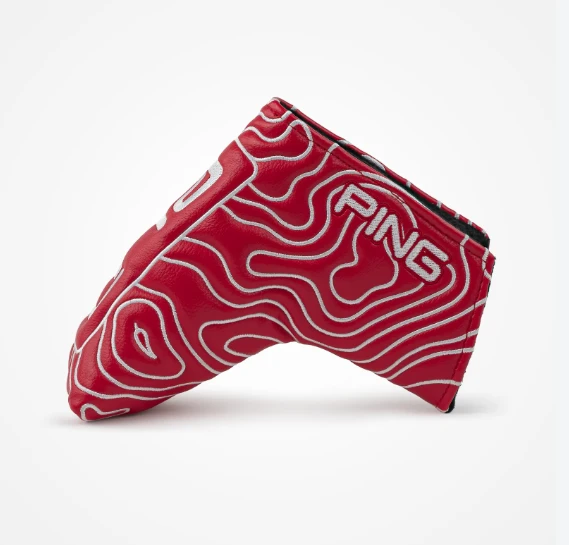
Blade Putter Cover
A blade putter cover is designed for traditional, narrow putter heads. It usually has a compact shape and a closure that keeps the cover securely attached.
Magnetic closures are popular because they allow golfers to remove and replace the cover conveniently.
Mallet Putter Cover
Mallet putters have larger and often more complicated head shapes, so they require specially designed covers.
Some models have asymmetrical profiles or additional alignment structures. A mallet cover should therefore be developed around the actual putter shape rather than simply enlarged from a blade cover pattern.
For example, Callaway offers separate Odyssey blade and mallet putter headcovers in its product collection. This reflects the different fit requirements of these two putter types. Callaway Headcovers.
Should You Include Iron Headcovers?
Iron Covers Are Optional
Unlike drivers and woods, irons are often stored directly in the golf bag without individual covers. Their metal clubheads are generally more resistant to cosmetic damage than the finishes on many modern woods.
However, some golfers prefer iron covers to reduce scratches and noise, particularly during transportation.
For brands, iron headcovers can be offered as an additional accessory or as part of a more comprehensive protection collection. A magnetic or elastic closure can make them easier to use.
What Does a Typical Golf Headcover Set Look Like?
The number of headcovers depends on the number and types of clubs a golfer carries. There is no universal configuration.
For example, Callaway's 2026 XR men's complete set includes five headcovers alongside its clubs and golf bag. Its listed club configuration includes a driver, fairway wood, two hybrids, irons, wedges, and a putter. Callaway XR Complete Set.
The following table illustrates a practical configuration for different product programs.
|
Headcover Type |
Basic Set |
Extended Set |
|---|---|---|
|
Driver |
1 |
1 |
|
Fairway Wood |
1 |
2 |
|
Hybrid |
1 |
2 |
|
Putter |
1 |
1 |
|
Iron Covers |
Optional |
Optional |
An extended set may include additional fairway wood or hybrid covers depending on the golfer's actual club configuration. Putter covers should also be selected according to blade or mallet design.
What Should Brands Consider When Developing a Custom Headcover Set?
Keep Materials and Design Consistent
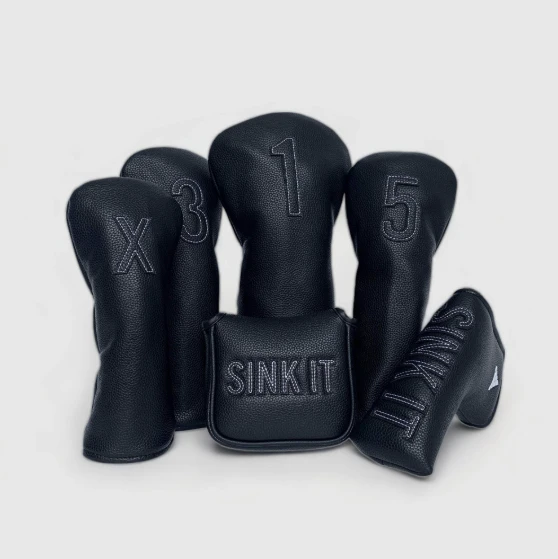
A matching headcover collection should look like one product family. Brands can use PU leather, genuine leather, microfiber synthetic leather, neoprene, or knit materials depending on their target market.
Color combinations, embroidery, embossed logos, appliqué, and decorative patches can help create a recognizable collection. However, the design should also consider the shape and fit of each individual cover.
Check Fit and Construction Before Production
The most important step is to test samples on the actual driver, fairway wood, hybrid, and putter models. Check that covers are easy to remove, stay securely in place, and provide sufficient protection.
For private-label brands, Legend Times supports OEM/ODM golf headcover development, including individual club covers, matching sets, material selection, logo customization, and packaging.
Conclusion
A golf club headcover set should generally include driver, fairway wood, hybrid, and putter covers. Additional fairway wood and hybrid covers can be added according to the golfer's club configuration, while iron covers remain optional.
For brands, the best headcover collection combines correct sizing, practical protection, and consistent design. A well-coordinated set can do more than protect clubs-it can also strengthen the overall appearance of a golf brand.
Frequently Asked Questions
There is no fixed standard. Many complete golf sets include around three to five headcovers, depending on the number of woods, hybrids, and putters.
Not always. Iron covers are usually optional and may be sold separately or included in extended protection sets.
Yes. Blade and mallet putters have different head shapes, so their covers should be designed to provide a secure fit.
Number or loft identification is useful when golfers carry multiple fairway woods or hybrids. It makes club selection easier and helps distinguish similar covers.
Yes. Brands can customize the number of covers, materials, colors, sizes, logos, embroidery, closures, and packaging to match their product collection.