


Introduction: Understanding How Golf Caddy Bags Are Made
For many golfers, a golf caddy bag is simply a tool to carry clubs and accessories. However, for golf brands, retailers, distributors, and golf organizations, it is also a product that represents brand identity and market positioning.
When companies decide to launch their own golf bag collections, choosing an OEM golf caddy bag manufacturer is often the most efficient way to develop customized products. Instead of purchasing standard bags from the market, buyers can work directly with a factory to create products based on their own requirements, including design, materials, colors, logo styles, and functional features.
According to industry reports, the global golf equipment market continues to grow as golf participation increases in different regions, creating more opportunities for private-label and customized golf products. For businesses entering this market, understanding the manufacturing process helps reduce sourcing risks and improves product decisions.
So, how exactly is a golf caddy bag manufactured?
This guide explains each stage, from product design and material selection to production, quality control, and final shipment.
1. What Is an OEM Golf Caddy Bag?
An OEM golf caddy bag is a golf bag produced by a manufacturer according to a customer's specifications.
The buyer usually provides:
1.Brand information
2.Product requirements
3.Design ideas
4.Logo artwork
5.Target market expectations
The manufacturer is responsible for:
1.Material sourcing
2.Sample development
3.Production
4.Quality inspection
5.Packaging
This production model is widely used by:
1.Golf equipment brands
2.Sports retailers
3.Golf clubs
4.Corporate gift companies
5.Golf product distributors
Compared with ready-made products, OEM manufacturing gives buyers more flexibility to create unique golf bags that match their brand positioning.
OEM vs ODM Golf Bag Manufacturing
Understanding different manufacturing models helps buyers choose the right cooperation method.
| Type | Description | Suitable For |
|---|---|---|
| Standard Product | Existing designs with limited changes | Buyers needing fast supply |
| OEM Golf Bag | Customer designs produced by factory | Brands and distributors |
| ODM Golf Bag | Factory develops designs with customization | Buyers needing product development support |
For example, a golf brand may already have a logo and product concept but needs a professional factory to handle production. In this case, an OEM supplier can provide the manufacturing capability needed to turn the idea into a finished product.
2. Golf Caddy Bag Design and Product Development
Before production begins, every custom golf bag starts with product development.
A professional manufacturer usually works with buyers to confirm product details and create a production plan.
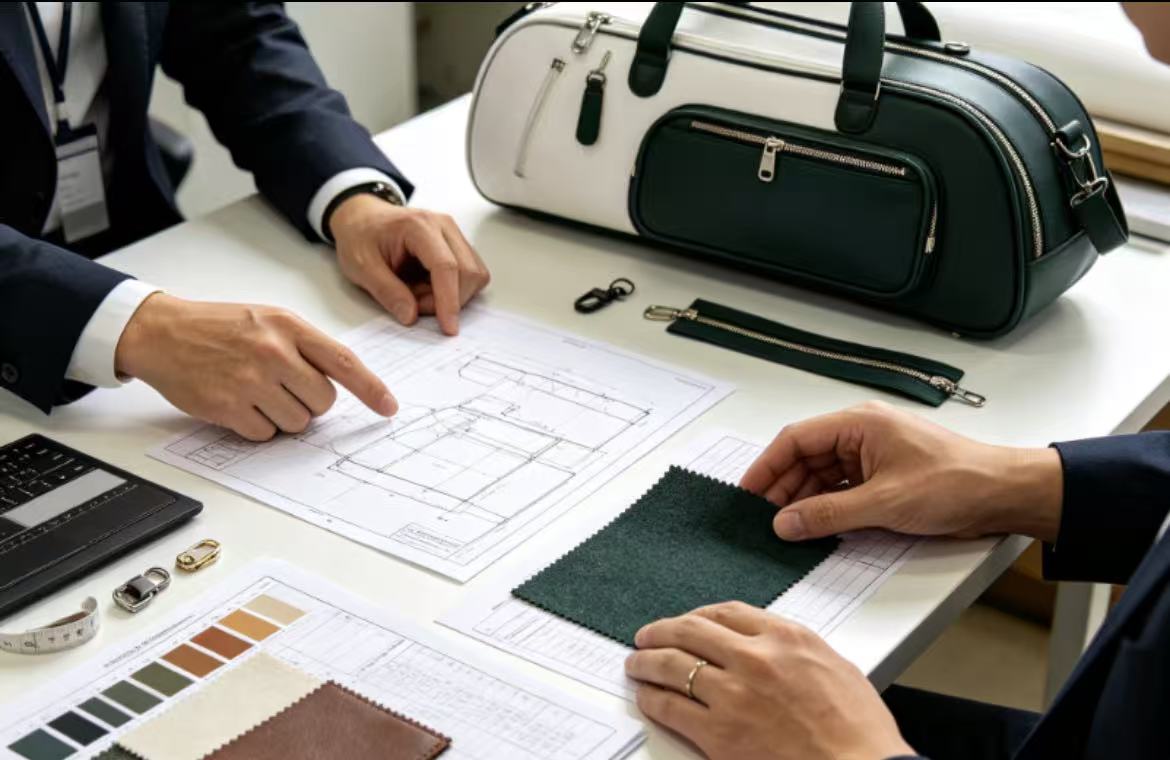
Product Structure Design
A golf caddy bag includes many different components:
1.Club divider system
2.Main storage compartment
3.Front pockets
4.Side pockets
5.Carry handle
6.Shoulder strap
7.Rain cover
Stand mechanism (for stand bag models)
The design must balance several factors:
| Design Consideration | Why It Matters |
|---|---|
| Weight | Improves carrying comfort |
| Storage Space | Meets golfer needs |
| Balance | Prevents uncomfortable carrying |
| Durability | Improves product lifespan |
| Appearance | Supports brand image |
For example, a lightweight golf stand bag may focus on mobility, while a premium golf caddy bag may require stronger materials and more detailed construction.
3. Material Selection for OEM Golf Caddy Bags
Material selection directly affects the quality, appearance, and price of a golf bag.
Different materials are suitable for different market positions.
| Material | Main Features | Common Use |
|---|---|---|
| Polyester | Lightweight and cost-effective | Sports golf bags |
| Nylon | Strong and abrasion-resistant | Performance golf bags |
| PU Leather | Premium appearance and flexible customization | High-end golf products |
| Synthetic Leather | Balanced quality and price | Commercial collections |
Polyester and Nylon Materials
Polyester and nylon are commonly used for lightweight golf bags.
Advantages include:
1.Easy maintenance
2.Good durability
3.Lower weight
4.Wide color options
These materials are suitable for brands focusing on practical performance products.
PU Leather Golf Caddy Bags
PU leather is popular for premium golf products because it provides:
1.Smooth surface texture
2.Modern appearance
3.Multiple logo options
4.Better visual value
It works well with customization techniques such as:
1.Embroidery
2.Embossing
3.High frequency logo
4.Decorative panels
For brands looking for a more premium product image, PU leather can create a stronger market impression.
4. Golf Caddy Bag Manufacturing Process Step by Step
After the design and sample are approved, the product moves into production.
The manufacturing process usually includes several important stages.
| Production Stage | Main Work |
|---|---|
| Material Preparation | Checking and cutting materials |
| Logo Processing | Applying branding details |
| Sewing | Assembling bag components |
| Hardware Installation | Adding zippers and accessories |
| Final Assembly | Completing the finished product |
| Quality Inspection | Checking performance and appearance |
Step 1: Material Cutting and Preparation
The first production step is preparing raw materials.
Factory workers cut materials according to approved patterns.
Main parts include:
1.Body panels
2.Pocket panels
3.Strap materials
4.Inner lining
5.Reinforcement parts
During this stage, manufacturers check:
1.Material color consistency
2.Surface quality
3.Cutting accuracy
Accurate cutting is important because even small differences can affect the final shape of the golf bag.
Step 2: Logo and Branding Process
Logo customization is an important part of OEM golf bag production.
Different logo techniques create different effects.
| Logo Process | Features |
|---|---|
| Embroidery | Premium thread texture and durability |
| Heat Transfer | Suitable for detailed colorful logos |
| PVC Patch | Creates a 3D sporty effect |
| Embossing | Elegant surface impression |
| High Frequency Logo | Integrated modern appearance |
The best logo method depends on:
1.Material type
2.Brand style
3.Design complexity
4.Target price level
Step 3: Sewing and Assembly
Sewing is one of the most important production processes.
Workers assemble:
1.Main body
2.Pockets
3.Divider sections
4.Shoulder straps
5.Handles
Quality depends on:
1.Stitching strength
2.Sewing accuracy
3.Reinforcement methods
Areas such as straps and handles require additional attention because they experience frequent pressure during use.
Step 4: Hardware Installation
Golf caddy bags include many hardware components:
1.Zippers
2.Buckles
3.Plastic parts
4.Metal accessories
Manufacturers inspect:
1.Smooth zipper operation
2.Secure attachment
3.Component matching
Good hardware improves both product durability and user experience.
Step 5: Final Assembly and Finishing
After all components are completed, the factory performs final finishing.
Workers check:
1.Loose threads
2.Product shape
3.Surface cleanliness
4.Overall appearance
The finished golf bags are then prepared for quality inspection and packaging.
5. Quality Control in Golf Caddy Bag Manufacturing
Quality control is one of the biggest concerns for international buyers.
A reliable golf bag manufacturer should have quality checks throughout the entire production process.
Material Inspection
Before production:
Check:
1.Fabric quality
2.Color accuracy
3.Hardware condition
4.Logo materials
Production Inspection
During manufacturing:
Inspect:
1.Stitching quality
2.Pocket structure
3.Logo position
4.Product shape
Final Inspection
Before shipment:
| Inspection Area | Checking Details |
|---|---|
| Appearance | Color, shape, finishing |
| Function | Zippers, straps, pockets |
| Structure | Strength and durability |
| Packaging | Quantity and protection |
A complete inspection system helps ensure that bulk orders maintain consistent quality.
6. Customization Options Available from OEM Golf Bag Factories
One major advantage of OEM production is customization flexibility.
Buyers can customize:
Logo Design
Options include:
1.Embroidery
2.Printing
3.PVC patch
4.Embossing
5.High frequency logo
Color Combination
Factories can customize:
1.Main colors
2.Contrast panels
3.Thread colors
4.Accessories
Functional Design
Possible adjustments include:
1.Pocket quantity
2.Divider structure
3.Strap system
4.Handle design
5.Rain cover
Packaging
Private-label products can include:
1.Custom labels
2.Hang tags
3.Packaging boxes
7. How to Choose the Right OEM Golf Caddy Bag Manufacturer
Choosing a suitable supplier is critical for long-term cooperation.
Buyers should evaluate several factors.
Manufacturing Experience
A manufacturer with experience in:
1.Golf bags
2.Golf headcovers
3.Golf accessories
usually understands market requirements better.
Product Development Ability
A professional supplier should provide:
1.Design suggestions
2.Material recommendations
3.Sampling support
4.Production improvement ideas
Factory Production Capability
Important factors include:
1.Production capacity
2.Quality management
3.Export experience
4.Delivery reliability
Communication Support
Good communication helps avoid misunderstandings during customization.
A reliable supplier should provide:
1.Clear updates
2.Professional feedback
3.Fast solutions
About LEGEND TIMES
LEGEND TIMES focuses on golf bag and golf accessory manufacturing, providing OEM solutions for customers who need customized golf caddy bags, golf stand bags, and related products.
Through experience in material selection, logo customization, product development, and production management, LEGEND TIMES helps customers transform product ideas into finished golf products suitable for different markets.
FAQ

01.How long does it take to manufacture custom golf caddy bags?
02.Can I customize my own logo on golf caddy bags?
03.What materials are best for golf caddy bags?
04.What is the MOQ for OEM golf bags?
05.Why choose an OEM golf bag manufacturer instead of buying ready-made products?