



Introduction: Why Japanese Golf Caddy Bags Are Different
When you compare Japanese golf caddy bags with many products sold in the U.S. or Europe, the difference is often visible before you even look at the specification sheet.
Japanese bags tend to place more attention on appearance, panel balance, logo placement, color combinations and small functional details. Even relatively traditional cart bags often feel more designed as a complete product rather than simply as a container for 14 clubs.
The term "caddy bag" is also used more broadly in Japan than in some Western markets. It can refer to full-size cart-style bags, professional tour bags and, in some product ranges, stand-type golf bags.
For golfers, these brands offer very different choices, from lightweight practical models to premium synthetic-leather and fashion-led bags. For golf brands and product developers, the Japanese market is also worth studying because it shows how materials, details and brand identity can turn a functional golf bag into a lifestyle product.
Here are 10 Japanese golf caddy bag brands worth knowing.
What Makes the Japanese Caddy Bag Market Interesting?
One thing that stands out in the Japanese market is that there is no single idea of what a premium golf bag should look like.
Some brands, such as XXIO and PRGR, stay close to the equipment side of golf. Their bags are practical, organized and closely connected with their club lines. Others, such as BRIEFING GOLF and PEARLY GATES, treat the caddy bag almost like a fashion or lifestyle product.
There is also a strong market for larger synthetic-leather cart bags. Compared with the lightweight stand-bag trend in the U.S., Japan still has plenty of demand for structured 9- to 9.5-inch caddy bags with strong branding, larger side panels and substantial storage.
From a manufacturing point of view, this is useful to understand. A Japanese-looking golf bag is not created simply by choosing white PU and adding a large logo. Proportion, piping, embroidery size, pocket placement, hardware finish and even the way the panels break across the side of the bag all affect the final impression.
That attention to detail is one reason Japanese caddy bags are useful references for both golfers and brands developing their own collections.
10 Japanese Golf Caddy Bag Brands Worth Knowing
1. HONMA
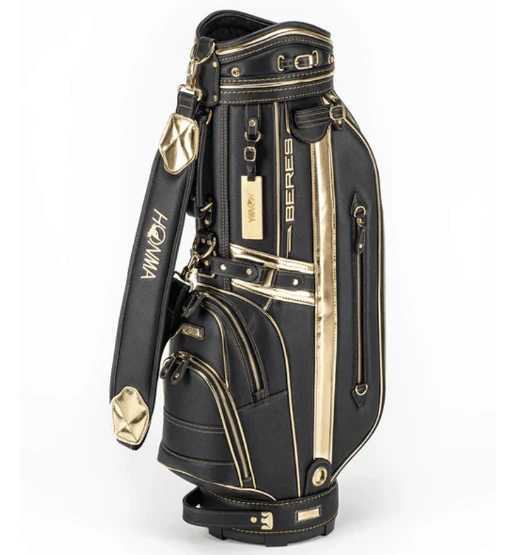
HONMA is one of the easiest Japanese names to associate with premium golf. Its caddy bag range covers everyday branded models as well as much more expensive luxury products.
What makes HONMA interesting is the way the company uses material and finish to create different levels of product. Some of its premium caddy bags use genuine cowhide and are made in Japan, while other products use combinations such as PVC and leather. HONMA's luxury CB12104, for example, uses Japanese cowhide and is listed as a Japan-made product.
For product developers, HONMA is a good reference for understanding how a traditional golf brand can move upward into luxury without making the bag look like fashion luggage. The golf identity remains obvious.
2. XXIO
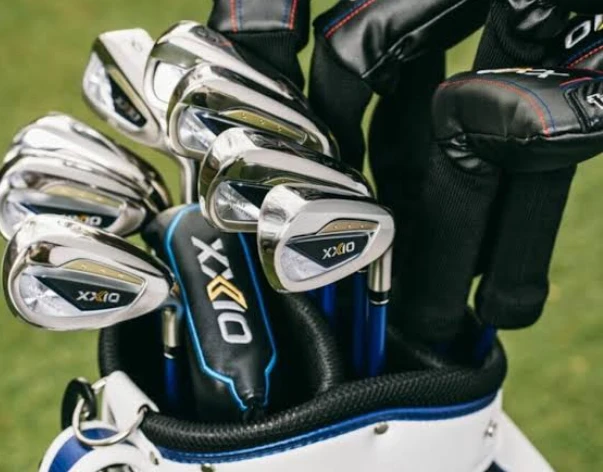
XXIO is a Japanese golf brand under Dunlop Sports and has a particularly strong following among golfers who value easy-to-use, refined equipment.
Its bag design tends to be less aggressive than tour-inspired brands. The overall language is cleaner and more approachable, which matches XXIO's broader positioning.
A good example is the XXIO Lightweight Caddy Bag. It uses a 9.5-inch, 4-way top, seven pockets and a removable shoulder strap while weighing about 4.5 lb. XXIO also offers a dedicated ladies' version using a similar lightweight approach.
XXIO is worth studying because it demonstrates that a Japanese caddy bag does not have to be heavy or highly decorated. Comfort, simplicity and a premium-but-friendly appearance can be enough.
3. Srixon
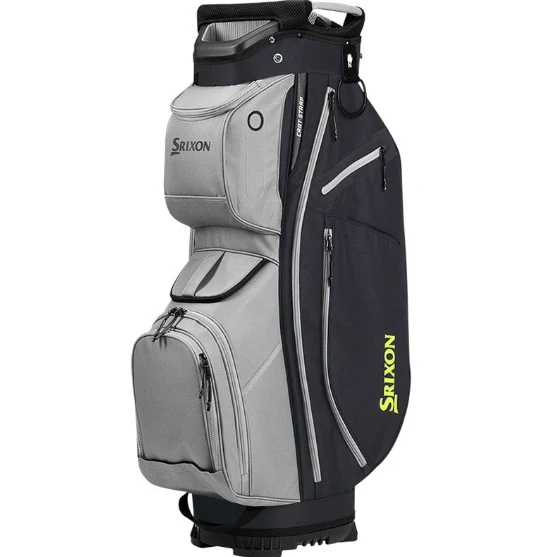
Srixon is another Japanese brand within Dunlop Sports, but its personality is quite different from XXIO. It is more performance-driven and closely connected with competitive golf.
Its golf bags tend to use stronger sporting graphics and branding, making them a useful reference for brands that want a more athletic product rather than a fashion-led one. Srixon continues to offer golf bags and travel products alongside its clubs, balls and accessories.
When comparing Srixon with XXIO, the lesson is useful: two brands can come from the same broader company but communicate with completely different golfers through materials, graphics and product styling.
That kind of differentiation is something private-label brands should think about before developing a bag.
4. Mizuno
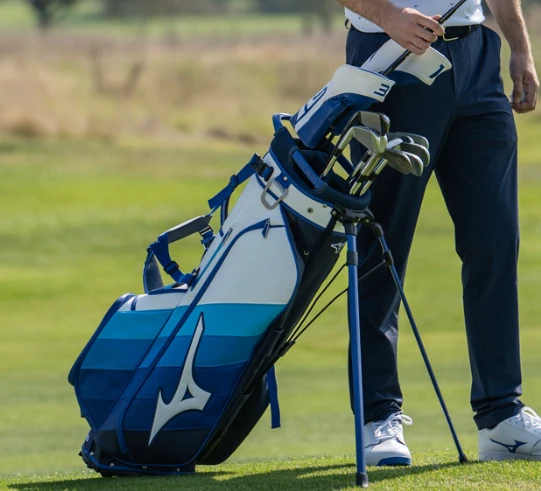
Mizuno has a long sporting-goods history and brings a more technical, performance-oriented image to golf.
Its caddy bags often feel connected to its equipment and professional golf identity rather than purely to fashion. Mizuno Pro models, in particular, tend to use relatively restrained branding compared with some highly graphic Japanese caddy bags.
For buyers studying the Japanese market, Mizuno is a useful example of how brand recognition can come from shape, color blocking and controlled logo use rather than covering every panel with decoration.
That approach can be particularly effective for established brands that already have strong visual recognition.
5. Bridgestone Golf
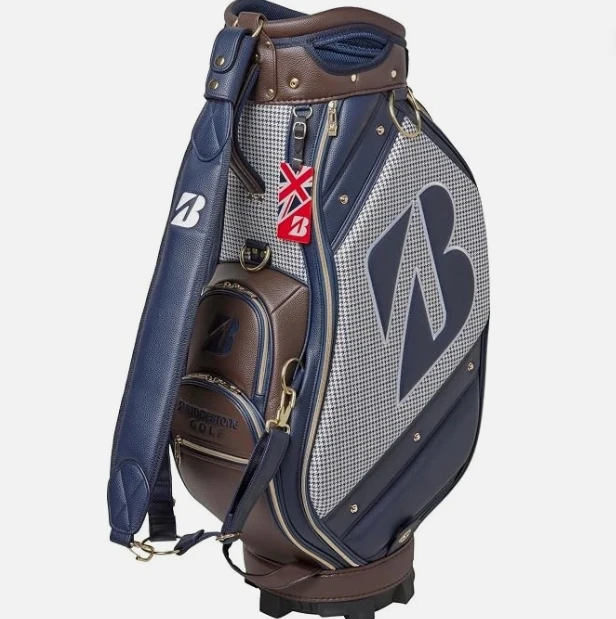
Bridgestone is another major Japanese golf name with a broad product ecosystem that includes balls, clubs, bags and accessories. The company continues to list golf bags within its current golf product range.
Its caddy bags often stay closer to a classic sporting-goods direction than the more fashion-oriented Japanese brands.
This makes Bridgestone a useful reference for brands that want a recognizable golf look without moving too far into lifestyle styling.
One lesson from brands such as Bridgestone is that practical products still need visual hierarchy. Large side logos, clean panels and controlled use of brand colors can make a conventional golf bag feel distinctly branded without requiring complicated construction.
6. Yamaha Golf
Outside Japan, many people first associate Yamaha with motorcycles or musical instruments, but Yamaha also has an established golf business.
Its golf products tend to follow a clean Japanese equipment-brand approach. The D88 complete set, for example, includes an 8.5-inch caddy bag using PU synthetic leather and polyester, with a full separator, shoulder strap and nameplate. Yamaha lists that bag as made in China.
That last detail is worth noticing. A Japanese golf brand does not necessarily mean the golf bag is manufactured in Japan.
For OEM buyers, this is an important reality of the industry. Brand identity, product development and manufacturing location are separate decisions.
7. ONOFF
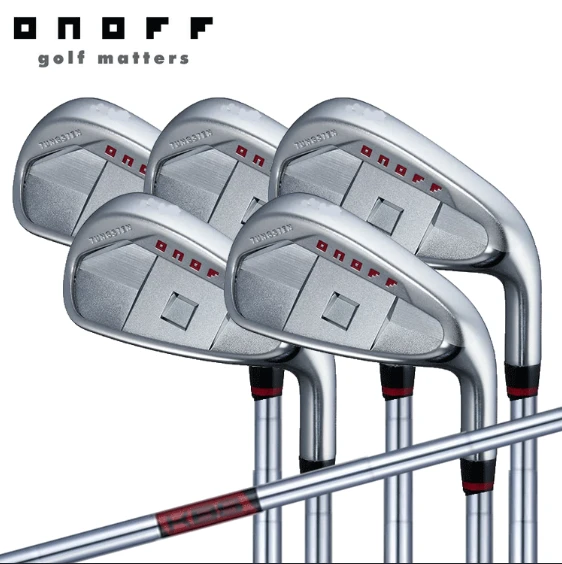
ONOFF has one of the more distinctive identities among Japanese golf equipment brands. Its product design often feels slightly softer, cleaner and more lifestyle-aware than heavily tour-focused brands.
The company currently offers a broad caddy bag lineup, including multiple 2026 models and dedicated ladies' products.
What I find most useful about ONOFF as a product reference is the restraint. The bags still clearly look Japanese, but many models do not depend on oversized graphics to get attention.
For a newer golf brand, that is a useful lesson. Premium design is often about deciding what not to add. Material texture, proportions and color can sometimes carry the product better than another logo or decorative panel.
8. PRGR
PRGR is particularly useful if you want to understand the practical side of modern Japanese caddy bag design.
Its current range shows several distinct directions. The professional PRCB-261 uses PU synthetic leather and polyester, a 9.5-inch top and substantial storage, including magnetic and insulated pockets. At the other end, the PCB-109 is a slim 2.8 kg polyester stand caddy bag. PRGR also offers simpler PU cart models.
PRGR openly lists these current models as Made in China, which again shows how important Chinese manufacturing is even within established Japanese golf brands.
For OEM buyers, PRGR is a particularly useful reference because you can see how one brand uses different weights, materials and constructions without losing its identity.
9. BRIEFING GOLF
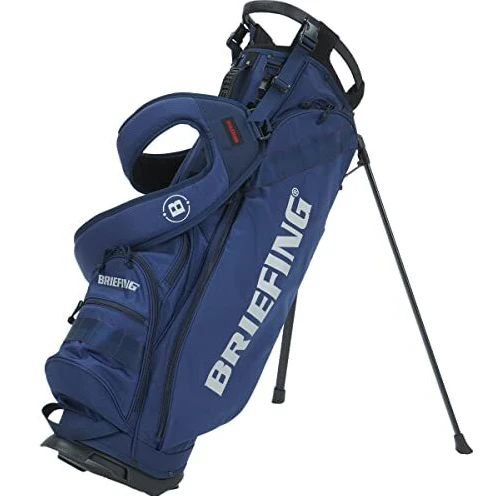
BRIEFING GOLF is one of the most interesting brands to study if your goal is not simply to make another traditional golf bag.
The brand takes its background in luggage and military-inspired design into golf under its "Urban Golf" concept. Its caddy bag range includes stand and cart models using materials such as CORDURA nylon, ballistic nylon, ripstop fabrics and even Dyneema combinations.
The details are particularly instructive. Current models include insulated pockets, magnetic-access storage, replaceable high-wear components and carefully engineered handles and stands.
BRIEFING shows what happens when material selection becomes part of the brand story. It is a good reference for brands trying to create a recognizable product without relying on traditional PU tour-bag styling.
10. PEARLY GATES
PEARLY GATES sits firmly on the fashion and lifestyle side of Japanese golf.
The brand describes itself around fashionable golf wear that crosses traditional age and gender boundaries, and its official accessories range includes a dedicated caddie bag category.
Its caddy bags are useful references for buyers interested in color, prints, seasonal collections and stronger visual branding. This is a very different strategy from Mizuno or Srixon, where equipment performance leads the brand.
PEARLY GATES demonstrates that a golf bag can also work as part of an outfit and lifestyle collection. For younger golf brands especially, this is an increasingly important direction to understand.

Quick Comparison of Japanese Golf Caddy Bag Brands
| Brand | General Positioning | Typical Bag Character | Material / Design Direction | What Brands Can Learn |
|---|---|---|---|---|
| HONMA | Premium / Luxury | Structured, refined | PU, PVC, leather, premium finishes | How to build luxury into a golf-specific product |
| XXIO | Premium / Easy Golf | Lightweight, clean | Performance fabrics, simple organization | Premium does not have to mean heavy |
| Srixon | Performance | Sporty, tour-influenced | Technical materials and stronger graphics | Clear performance identity |
| Mizuno | Technical / Performance | Clean, professional | Controlled branding and athletic design | Less branding can still feel premium |
| Bridgestone Golf | Mainstream Performance | Traditional, practical | Classic golf bag construction | Strong branding through simple panel design |
| Yamaha Golf | Equipment Focused | Clean, functional | PU and polyester combinations | Product simplicity and consistency |
| ONOFF | Premium Lifestyle | Refined, understated | Softer colors and clean styling | The value of restraint |
| PRGR | Performance / Functional | Sporty, organized | PU, polyester, lightweight options | Different constructions under one brand language |
| BRIEFING GOLF | Urban / Premium | Technical, distinctive | CORDURA, ballistic nylon, advanced textiles | Make materials part of the brand identity |
| PEARLY GATES | Fashion / Lifestyle | Colorful, expressive | Seasonal colors, patterns and graphics | Treat the caddy bag as a fashion product |
What Golf Brands Can Learn from the Japanese Market
The biggest lesson from Japanese golf caddy bags is not that one material or one structure is better than another. It is that the best brands are clear about who the product is for.
HONMA can make a leather-focused luxury bag because luxury already makes sense within its brand. BRIEFING can use ballistic nylon, webbing and military-inspired details because those elements connect naturally with its luggage heritage. PEARLY GATES can use stronger colors and seasonal graphics because its customers already see golf as part of fashion.
This sounds obvious, but it is one of the most common mistakes in private-label development. A buyer may take the body shape from one brand, the pockets from another, the materials from a third and a logo treatment from a fourth. The result often contains many good individual ideas but has no clear identity.
A better approach is to decide the customer first. Is the golfer looking for luxury, lightweight performance, classic styling, fashion, travel durability or strong organization? Once that decision is clear, materials and construction become much easier to choose.
There is also an important sourcing lesson: Japanese branding and Japanese manufacturing are not the same thing. PRGR currently identifies several of its caddy bags as made in China, and Yamaha also lists China as the origin of its D88 caddy bag. Meanwhile, HONMA still offers certain luxury Japan-made models.
That tells us something useful about the modern golf industry. Good Japanese product design can be combined with a strong Chinese manufacturing supply chain.
From Japanese Caddy Bag Inspiration to Your Own Golf Brand
For a golf brand developing its own caddy bag, Japanese products provide excellent references, but the goal should never be to copy a HONMA, PRGR or BRIEFING bag panel for panel.
The real value is understanding why the product works.
A premium PU caddy bag may need a more structured body, carefully controlled edge finishing and better hardware. A BRIEFING-style performance direction may depend more on technical fabrics, webbing and purposeful construction. A PEARLY GATES-style collection may require stronger control of seasonal colors, graphics and matching accessories.
Once the positioning is decided, an experienced OEM/ODM manufacturer can convert that concept into a manufacturable product.
Legend Times is a golf-focused manufacturer in Dongguan, China, supporting custom golf caddy bags, cart bags, stand bags, travel bags, headcovers and related accessories. Materials, colors, divider systems, pocket layouts, hardware, logos and packaging can be developed according to different brand positions.
For brands interested in the Japanese market, the objective should not be to make a "Japanese-looking bag." A stronger goal is to adopt what Japanese golf brands do well: clear positioning, disciplined details, useful functionality and consistency across the collection.
That is what ultimately creates a product that feels like a brand rather than simply another customized golf bag.
In the Japanese golf market, "caddy bag" is a common term for a full-size golf club bag. It can include traditional cart-style bags, tour-style bags and some stand models, so the term is broader than the way "caddie bag" may be understood in some Western markets.
Well-known names include HONMA, XXIO, Srixon, Mizuno, Bridgestone Golf, Yamaha Golf, ONOFF, PRGR, BRIEFING GOLF and PEARLY GATES. Their positioning ranges from performance and traditional golf to luxury, urban and fashion-focused products.
Not always. Some premium models are made in Japan, but many Japanese golf brands use manufacturing partners elsewhere in Asia. For example, current PRGR caddy bags and Yamaha's D88 caddy bag are officially listed as made in China, while HONMA offers selected luxury bags made in Japan.
Many Japanese golfers use carts or caddies rather than carrying the bag for an entire round, which allows the market to support larger and more structured caddy bags. Branding, storage, appearance and durability can therefore receive more emphasis than minimum weight alone.
Yes. An OEM/ODM manufacturer can customize materials, colors, size, divider construction, pocket layouts, hardware, embroidery and packaging. However, brands should use Japanese products as market references rather than directly copying another company's design. Building a clear original identity is more valuable for long-term brand development.