



Introduction
When developing or purchasing a golf caddy bag, size is one of the most important factors to consider. Many buyers focus first on colors, materials, logo design, or pocket layout, but the overall size of the bag directly affects how customers use it, how much it costs to produce, and which market it fits.
For golfers, the right size determines whether the bag feels comfortable during a round. For brands, retailers, and importers, choosing the right size can influence sales performance, shipping costs, and customer satisfaction.
A professional golf bag supplier usually does not recommend a size based only on appearance. The decision should consider the target customer, product positioning, club capacity, storage requirements, and production budget. A lightweight walking bag and a premium golf bag for frequent players may look similar, but their ideal structures and dimensions are very different.
Understanding Golf Caddy Bag Size: Why It Matters for Product Development
Golf caddy bags are not defined by one single measurement. Their size usually depends on several factors, including overall height, top opening diameter, divider system, pocket capacity, and internal structure.
For example, two golf bags may have a similar height, but one may feel much larger because it has a wider opening and more storage compartments. On the other hand, a compact design with fewer pockets may be preferred by golfers who value lightweight carrying.
For buyers developing private label golf bags, size selection should start with one question: Who is the final customer?
A beginner looking for an easy-to-carry golf bag has different expectations from an experienced golfer who needs space for accessories, clothing, and additional equipment.
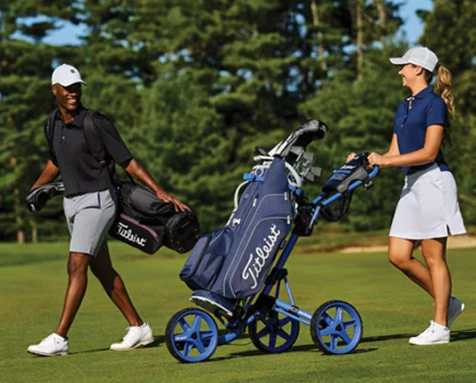
Generally, golf caddy bags can be divided into three size categories:
| Golf Caddy Bag Size | Main Characteristics | Typical Market |
|---|---|---|
| Small Size | Lightweight, compact structure, easy to carry | Beginners, junior golfers, casual players |
| Medium Size | Balanced storage and portability | Most retail customers and everyday golfers |
| Large Size | More capacity and premium features | Advanced players and high-end golf brands |
The goal is not to choose the largest possible bag, but to select the size that matches customer needs.
Small, Medium, or Large Golf Caddy Bag: Which Size Fits Your Market?
Small golf caddy bags are designed mainly for convenience. They are popular among golfers who prefer walking on the course and do not want to carry unnecessary weight. Because of their compact structure, they are often easier to handle and more affordable to manufacture.
From a business perspective, small bags can be a good choice for brands targeting entry-level golfers or customers who prefer simple products. They also provide advantages in logistics because smaller dimensions usually mean lower packaging and shipping costs.
However, the limited storage space can become a disadvantage for users who carry many accessories. If the target market includes serious golfers, a small bag may not provide enough functionality.
Medium-size golf caddy bags are usually the safest choice for most brands. They provide a good balance between carrying comfort and storage capacity, which makes them suitable for a wider range of customers.
For buyers launching their first golf bag collection, medium-size designs often create lower market risk. They can satisfy beginners while still meeting the needs of regular golfers. Many retail brands choose this category because it offers broader selling opportunities without significantly increasing production costs.
Large golf caddy bags are usually positioned toward premium users. They provide more storage space, stronger structures, and more opportunities for design details. These bags are often used by advanced golfers, professional players, or customers who prefer premium golf equipment.
However, larger size also means higher costs. More fabric, stronger reinforcement, larger cartons, and increased shipping volume all affect the final product price. For this reason, large golf bags should usually be developed for markets that can support a higher retail price.


How Golf Caddy Bag Size Affects Manufacturing Cost and Shipping
Many buyers only consider size from the user's perspective, but for importers and brands, size also has a direct impact on the supply chain.
A larger golf bag requires more materials, more sewing operations, and sometimes stronger internal support structures. This increases production costs. The packaging size also becomes larger, which affects container loading efficiency and international shipping expenses.
For example, a small change in bag height or width may require adjustments to the carton size. When thousands of units are shipped internationally, these differences can create a noticeable cost impact.
This is why experienced OEM golf bag manufacturers usually evaluate size together with materials and construction methods. A good supplier can help buyers find a balance between creating an attractive product and maintaining reasonable production costs.

Choosing Golf Caddy Bag Size Based on Customer Type
Different sales channels often require different bag sizes.
For online sellers and Amazon brands, medium-size golf caddy bags are often a practical option because they appeal to a larger customer group. Buyers usually want products that provide enough storage but are still easy to ship and competitively priced.
For premium golf brands, larger bags with upgraded materials such as PU leather, microfiber leather, or special fabric combinations may create stronger brand value. Customers in this segment usually care more about appearance, organization, and premium details.
For lightweight golf brands, smaller or medium-size bags are often more suitable because their customers usually prioritize portability and comfort.
1.Where the product will be sold;
2.The expected retail price;
3.Customer lifestyle and playing habits;
4.Competitor products in the market.
The same size may perform differently in different markets. For example, a walking golfer may prefer a lighter design, while a customer who mainly uses a golf cart may accept a larger bag with more storage.
What Should Buyers Consider When Developing Custom Golf Caddy Bags?
Choosing the right size is only the beginning of golf bag development. For custom projects, the supplier's experience is equally important.
A reliable private label golf caddy bag supplier should be able to provide suggestions during the development stage instead of simply producing according to customer drawings.

During sample development, buyers should check whether the factory can help optimize:
1.Overall dimensions;
2.Divider design;
3.Pocket placement;
4.Weight balance;
5.Material combination.
For example, increasing storage space may require stronger support to prevent the bag from losing its shape. A supplier with experience in golf bag production can identify these issues before mass production begins.
Sample speed is also important for brands that follow seasonal trends. A factory that can quickly adjust designs and provide prototypes allows buyers to test products faster and reduce development risks.
Common Mistakes When Selecting Golf Caddy Bag Size
One common mistake is assuming that a bigger golf bag automatically provides more value. While large bags offer more storage, many customers actually prefer lighter and easier-to-carry designs.
Another mistake is ignoring logistics. A product may look attractive during development, but oversized packaging can increase transportation costs and reduce profit margins.
Some buyers also develop products without clearly defining their target customer. A premium large golf bag may not perform well in a market where customers mainly look for affordable and lightweight options.
Before finalizing the size, buyers should always connect product design with customer demand. Understanding who will use the bag is more important than simply adding more space.
Conclusion: The Best Golf Caddy Bag Size Depends on Your Market
There is no single perfect size for every golf caddy bag. Small, medium, and large designs all have their own advantages depending on the target customer and market position.
Small bags focus on lightweight convenience. Medium bags provide the best balance between capacity and comfort. Large bags create premium value through greater storage and stronger design possibilities.
For brands, retailers, and importers, selecting the right size is an important part of product strategy. Working with an experienced custom golf bag manufacturer can help ensure the final product matches customer expectations while keeping production and shipping costs under control.
The best golf caddy bag is not the biggest one. It is the one that provides the right experience for the customers you want to reach.
Frequently Asked Questions
What is the standard size of a golf caddy bag?
+
-
There is no single standard size for all golf caddy bags. Dimensions vary depending on the intended use, club capacity, storage requirements, and product positioning.
How many clubs can a golf caddy bag hold?
+
-
Most medium and large golf caddy bags are designed to hold a complete set of 14 clubs. Smaller lightweight bags may hold fewer clubs to reduce weight.
Is a larger golf caddy bag always better?
+
-
Not necessarily. Larger bags provide more storage but also increase weight, production costs, and shipping expenses. The best size depends on the customer group.
Which golf caddy bag size is best for beginners?
+
-
Medium-size golf caddy bags are usually a good choice for beginners because they provide enough storage while remaining comfortable to carry.
Can golf bag suppliers customize the size?
+
-
Yes. Professional OEM golf bag suppliers can customize dimensions, divider systems, pocket layouts, materials, and other design features according to brand requirements.