



Introduction
Golf headcovers protect clubs from scratches, impact, and moisture. For golf brands, distributors, golf clubs, and private-label buyers, correct sizing also affects product quality, customer satisfaction, and return rates.
A cover that is too tight can be difficult to remove and may strain seams or embroidery. A cover that is too loose may slip off in a golf bag and look less premium. This golf headcover size guide explains practical size ranges for driver, fairway wood, hybrid, and putter covers, as well as what buyers should confirm before starting OEM production.
1. Standard Golf Headcover Size Chart
The measurements below are useful starting points for custom golf headcover development. They refer to typical finished cover sizes, not exact universal standards. Final dimensions can change based on club shape, outer material, lining thickness, padding, and construction method.
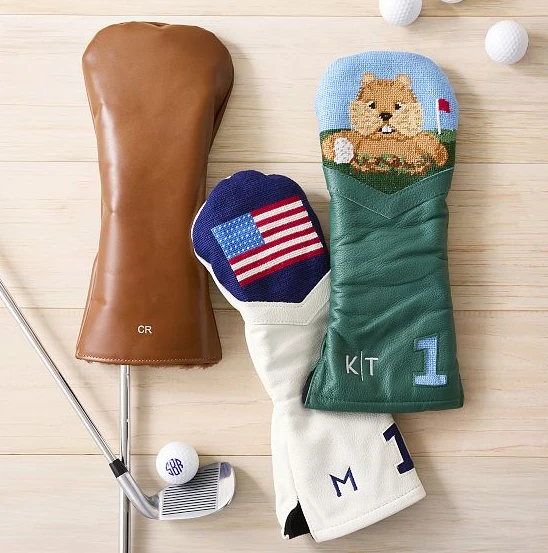
| Headcover Type | Typical Finished Size | Fits | Buyer Note |
|---|---|---|---|
| Driver headcover | 11–14 in. long × 6–7.25 in. wide | Most modern drivers | Test the fit on a large driver head |
| Fairway wood headcover | 10–12 in. long × about 5 in. wide | 3-, 5-, 7-, and 9-woods | One size can often fit several wood numbers |
| Hybrid headcover | 9–10 in. long × 3.6–4.5 in. wide | Hybrid and rescue clubs | Should fit closer than a fairway cover |
| Blade putter cover | About 6 × 6.5 × 3.25 in. | Traditional blade putters | Check closure direction and internal depth |
| Mallet putter cover | Depends on the putter shape | Mallet and mid-mallet putters | Use actual club measurements before sampling |
Modern driver heads are often developed around a similar maximum size. The USGA Equipment Rules state that conforming wood clubheads must not exceed 460cc, plus a permitted tolerance. This helps manufacturers create driver covers that fit most modern models, although actual head shapes can still vary.
Buyers should therefore treat a size chart as a planning tool rather than a final production specification. The final decision should always be made after checking a physical sample on the intended club.
2. Driver Headcover Size: How to Fit Modern Drivers
Driver headcovers are the largest covers in a standard golf collection. They need enough internal space for a wide crown, deep face, shaft opening, and protective lining.
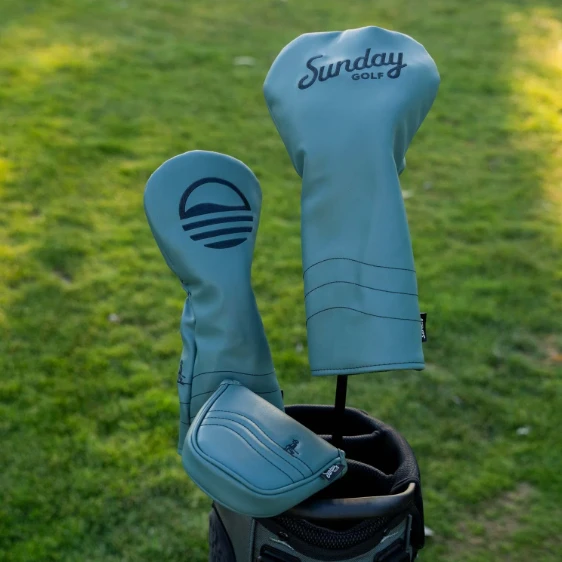
A typical custom driver headcover is around 11–14 inches long and 6–7.25 inches wide. The correct size depends on the material. A knitted cover has natural stretch, while a structured PU leather cover with plush lining needs more precise internal allowance.
When developing a custom driver headcover, buyers should confirm the largest driver head that the cover must fit, the shaft-opening width, and the retention method. Elastic panels or ribbed knit sleeves can help the cover remain secure while allowing easy removal. Buyers should also confirm the thickness of the lining and foam, because these materials reduce internal space.
Logo placement is equally important. Large embroidery, 3D appliqué, or raised patches can make a design look premium, but these elements should not restrict the opening or distort the cover shape. If a collection includes mini drivers, the buyer should also decide whether to use a standard driver cover or develop a separate mini-driver size.
A driver cover should feel secure without requiring excessive force to remove. For a new OEM project, sending the manufacturer a physical club sample is the best option. When this is not possible, buyers should provide accurate measurements and photos of the face, crown, sole, heel, toe, and hosel.
3. Fairway Wood and Hybrid Headcover Sizes
Fairway wood and hybrid covers are usually developed as part of the same collection as a driver cover. They should use matching materials, colors, lining, and logo style, but their proportions should be smaller.
Fairway wood covers are commonly around 10–12 inches long and about 5 inches wide. One standard fairway cover can often fit several club numbers, such as 3-wood, 5-wood, 7-wood, and 9-wood. Brands can identify each club with embroidery, woven labels, removable number tags, or number patches.
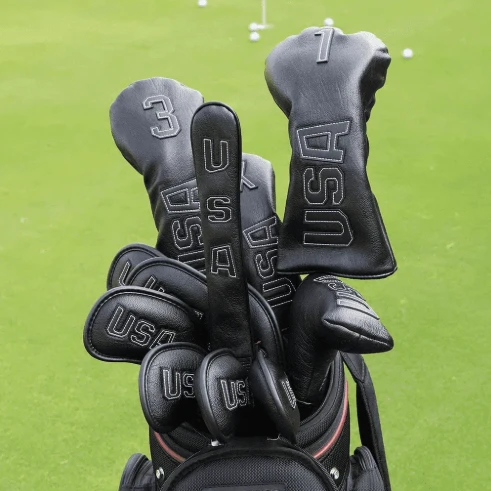
Hybrid covers are more compact. They are usually around 9–10 inches long and 3.6–4.5 inches wide. A hybrid cover should fit closer to the club head than a fairway cover. If it is too large, it may look loose and move around inside the golf bag.
| Product Type | Recommended Design Approach | Identification Option | Key Development Check |
| Driver cover | Largest structure and widest opening | "1," "D," or Driver text | Fit a large driver head |
| Fairway wood cover | One standard pattern for several woods | 3, 5, 7, or 9 embroidery | Test the largest and smallest fairway wood |
| Hybrid cover | Shorter and narrower structure | H, X, loft, or hybrid number | Avoid a loose fit |
| Utility cover | Similar to hybrid, adjusted by club shape | Loft or utility number | Confirm actual club dimensions |
For private-label golf headcovers, number identification should be planned early in the development process. A number patch or embroidery may appear simple, but its size and placement can affect the balance of the finished design. It should be included in the artwork confirmation and physical sample review.
4. Putter Headcover Size: Blade vs. Mallet
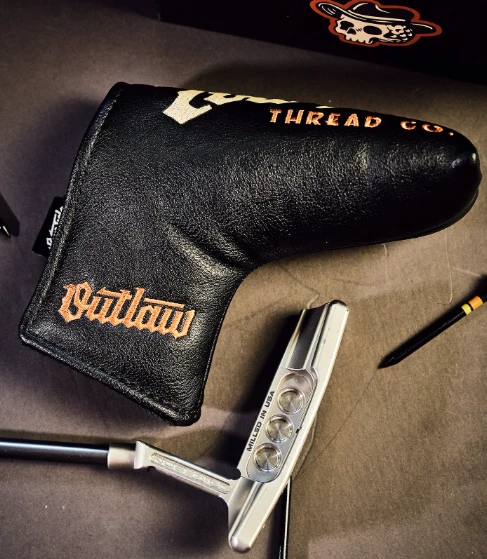
Putter covers need more careful sizing because putter head shapes vary widely. A blade putter, mid-mallet, and large mallet may all require different patterns.
Blade putter covers are usually rectangular and often use magnetic closures. A practical size reference is about 6 inches wide, 6.5 inches long, and 3.25 inches deep. The cover should protect the face, sole, heel, and toe without leaving too much empty space.
Mallet putter covers are more complex. Mallet heads can be rounded, square, winged, deep, oversized, or built with unusual alignment features. A general mallet cover can fit many common shapes, but it may not fit every putter correctly.
For a custom putter headcover, the buyer should provide a physical putter sample whenever possible. If this is not practical, the factory needs accurate length, width, and height measurements, together with photos of the face, sole, heel, toe, and back. The buyer should also confirm the hosel position, opening direction, preferred closure type, and logo orientation.
A custom mallet putter cover should not be approved based only on a front-view product photo. The factory needs to understand the full three-dimensional shape before creating a production sample.
5. How to Measure a Club for Custom Golf Headcovers
For standard driver, fairway wood, and hybrid covers, the club category provides a useful starting point. For fully custom designs and putter covers, actual measurements are more reliable.
Buyers should measure the widest, tallest, and deepest points of the club head. Any raised weight ports, wings, alignment features, or unusual hosel shapes should be included in the measurement process.
| Measurement | What to Check | Why It Matters |
| Heel-to-toe length | Longest horizontal point | Determines the main cover width |
| Front-to-back width | Face to rear of the head | Helps create enough crown and sole space |
| Sole-to-crown height | Lowest to highest point | Prevents tight or distorted fit |
| Shaft-entry position | Opening location and diameter | Supports easy insertion and removal |
| Closure area | Opening and flap direction | Important for putter cover security |
| Lining thickness | Plush, foam, fleece, or knit | Changes available internal space |
The manufacturer should add suitable allowance for seams, lining, embroidery, and everyday use. However, too much extra space can make the cover look oversized and reduce protection.
Sample development is the most important stage of an OEM golf headcover project. Buyers should first approve the digital artwork, then review a physical sample on the target club. The sample review should confirm fit, removal force, logo alignment, seam quality, lining, and closure strength before bulk production begins.
6. What Buyers Should Ask a Golf Headcover Manufacturer
A reliable custom golf headcover manufacturer should understand both product fit and B2B project requirements. Before selecting a supplier, buyers should confirm whether the factory can develop a cover from a sketch, technical drawing, artwork file, reference sample, or actual club. The supplier should also explain its sample timeline, revision process, and ability to create matching driver, fairway, hybrid, and putter covers as one collection.
Quality control should cover stitching strength, seam alignment, embroidery accuracy, thread trimming, material color consistency, lining quality, and size consistency during mass production. For putter covers, the buyer should ask how the factory checks magnetic closure strength. For retail projects, it is also useful to confirm how the supplier handles packaging, labels, barcode placement, and final-carton inspection.
For U.S. retail projects, buyers should make sure that material, country-of-origin, and product information are accurate. The Federal Trade Commission's textile guidance explains labeling requirements that can apply to many textile products sold in the United States. Buyers should confirm the requirements for their specific product and market with a qualified compliance adviser.
For EU-bound products, buyers can ask suppliers for material information related to REACH. The European Chemicals Agency explains that Candidate List substances can create obligations for producers, importers, and suppliers of articles.
For marketplace sales, product listings should match the approved specification. Material composition, dimensions, logo details, country of origin, and packaging information should remain consistent across samples, invoices, labels, and online product pages.
Buyers developing original designs should also confirm commercial protection. A supplier should be asked whether it will sign an NDA, protect artwork files, avoid publishing product photos before launch, and clarify ownership of custom patterns, molds, and tooling.
For export orders, buyers should confirm the Incoterm used in the quotation, such as EXW, FOB, CIF, or DDP. The ICC Incoterms® 2020 checklist is a useful reference for understanding shipping responsibilities.
A supplier that can support sampling, quality control, documentation, confidential development, and export packing is often more valuable than one that only offers the lowest unit price.
Frequently Asked Questions
Will one driver headcover fit all modern drivers?
+
-
Most standard driver covers are designed to fit modern driver heads, including many 460cc models. However, buyers should test the sample on the largest intended driver before bulk production.Most standard driver covers are designed to fit modern driver heads, including many 460cc models. However, buyers should test the sample on the largest intended driver before bulk production.
Can one fairway wood cover fit both a 3-wood and a 7-wood?
+
-
Usually, yes. Many brands use one fairway wood size and add embroidered numbers, patches, or labels to identify each club.
Is a hybrid headcover smaller than a fairway wood headcover?
+
-
Yes. Hybrid covers are normally shorter and narrower. A fairway wood cover may fit a hybrid, but it can look loose and less premium.
Do I need a separate cover for a mallet putter?
+
-
In most cases, yes. Mallet putters vary widely in shape and depth, so a dedicated cover gives a better fit than a standard blade cover.
What should I send a factory for a custom golf headcover quotation?
+
-
Send the target club type, measurements or physical sample, material preference, lining requirement, logo artwork, color codes, closure style, packaging needs, and estimated order quantity.