



Introduction: Absorbency Is More Than Just Choosing a Soft Towel
When developing or purchasing a golf towel, many buyers focus first on appearance, color and logo customization. However, the most important function of a golf towel is still its ability to absorb moisture and clean golf equipment effectively.
A towel that looks premium but cannot remove water, grass residue and dirt efficiently will not create a good user experience.
For golf brands and distributors, understanding what makes a towel highly absorbent is important because absorbency is affected by many factors, including fiber type, fabric construction, GSM, finishing process and even washing treatment.
This guide explains the key factors that determine golf towel performance and what buyers should consider when developing a private-label golf towel.
Fiber Material: The Foundation of Absorbency
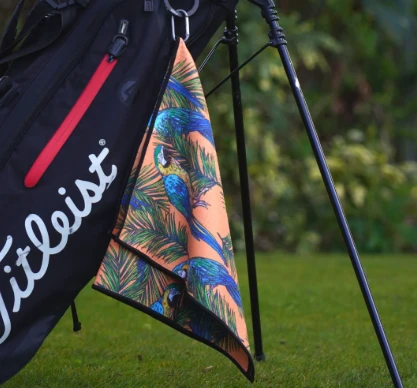
The first factor affecting golf towel absorbency is the fiber itself.
Most golf towels today use microfiber because it provides a good balance between absorbency, softness, durability and cost. However, not all microfiber towels perform the same.
Microfiber is usually made from polyester and polyamide (nylon). The polyamide content is especially important because it improves water absorption and creates a softer hand feel.
For example, a microfiber towel with a higher percentage of polyamide often feels softer and absorbs moisture faster than a basic polyester towel. However, increasing polyamide content also increases material cost, so the right ratio depends on the product positioning.
Many golf towels use an 80% polyester / 20% polyamide blend because it offers a practical balance between performance and price.
Cotton is another traditional towel material. It naturally absorbs water well and provides a familiar soft feeling. However, compared with microfiber, cotton is usually heavier, dries slower and may become bulky when wet.
For golf use, where golfers often carry towels attached to their bag during an entire round, microfiber has become more popular because it remains lightweight and dries faster.
The important point for buyers is that "microfiber" alone does not guarantee high absorbency. Fiber quality, blend ratio and manufacturing process all influence the final performance.
Fabric Construction: Why Waffle and Terry Weave Feel Different
Besides fiber material, the way the fabric is constructed has a major impact on how a golf towel works.
One popular construction is waffle weave microfiber.
The raised waffle pattern creates more surface area compared with a flat fabric. These small pockets help trap water, dirt and grass particles, which is why waffle towels are widely used for golf cleaning.
A waffle towel can feel thinner than a traditional towel, but its structure allows it to perform efficiently because moisture has more places to collect.
Terry weave towels work differently. The surface contains loops that create a thicker, softer texture. Terry construction can provide strong water absorption and a plush feeling, making it popular for premium towels.
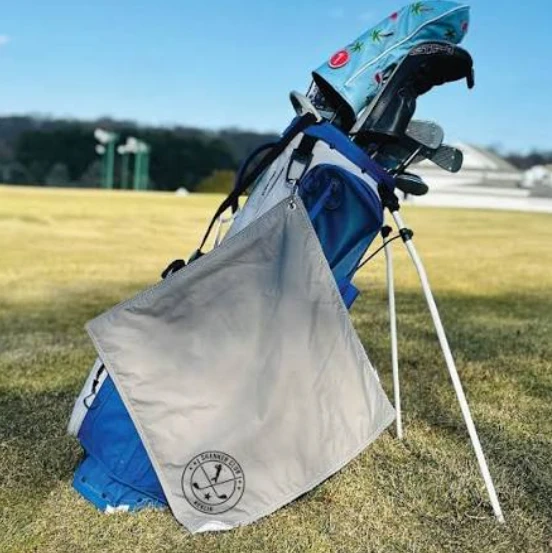
However, thicker does not always mean better.
A very heavy towel may absorb a lot of water, but it can also become heavier during a round and take longer to dry. For golf applications, the ideal towel usually balances absorbency with portability.
This is why professional buyers should evaluate the complete product experience rather than choosing only based on thickness or appearance.
A well-designed golf towel should be easy to carry, effective during use and practical after repeated washing.
GSM: Why Weight Matters but Should Not Be the Only Measurement
GSM (grams per square meter) is one of the most commonly discussed specifications when purchasing towels.
Generally, a higher GSM towel has more fabric density, which can provide a thicker feeling and greater water-holding capacity.
However, GSM alone does not determine absorbency.
A poorly constructed high-GSM towel may perform worse than a lower-GSM microfiber towel with better fiber quality and fabric structure.

For golf towels, many commercial products are within the range of approximately 300–500 GSM depending on the intended market.
A lightweight golf towel used mainly for cleaning clubs may not need extremely high GSM. In fact, a slightly lighter towel may be preferred because it dries faster and is easier to carry.
A premium golf towel designed for retail customers may use a higher GSM construction because customers often associate thickness with quality.
The correct approach is to match GSM with the product purpose.
For example:
A promotional golf towel may prioritize cost efficiency and lightweight construction.
An Amazon retail golf towel may require better hand feel, stronger absorbency and premium packaging.
A luxury golf brand may focus more on material quality, finishing and overall experience.
Experienced buyers usually evaluate GSM together with fiber composition, weave structure and actual absorption testing.
Other Details That Affect Golf Towel Performance
Absorbency is not determined only by the fabric. Several production details can significantly affect the final result.
One important factor is finishing treatment.
Some fabrics receive softening treatments to improve hand feel. However, excessive finishing agents can sometimes reduce the ability of fibers to absorb water because they create a coating effect on the surface.
Washing and preparation processes can also influence performance. Some microfiber products become more absorbent after initial washing because manufacturing residues are removed.
Edge construction is another detail that buyers should not ignore.
A golf towel is attached to a golf bag, exposed to outdoor conditions and washed repeatedly. Weak stitching around the edge can cause fraying, which affects both appearance and lifespan.
The attachment method also matters. Carabiners, clips and loops should be strong enough for daily use without damaging the towel.

The attachment method also matters. Carabiners, clips and loops should be strong enough for daily use without damaging the towel.
For branded golf towels, logo methods should also be considered carefully. Embroidery can look premium but may slightly affect the softness of the towel surface. Printing provides more flexibility for large graphics but requires suitable ink adhesion.
A good golf towel is therefore not simply a piece of absorbent fabric. It is a combination of material, construction and finishing details.
How Brands Should Evaluate a Golf Towel Manufacturer
For B2B buyers, choosing the right manufacturer is often more important than choosing the specification sheet.
A supplier should be able to explain why a certain material, GSM and construction are suitable for your target customer instead of simply offering the cheapest option.

During development, brands should ask suppliers several practical questions:
Can you provide the actual GSM measurement?
What is the microfiber composition?
Has the towel been tested after washing?
How does the fabric perform compared with other options?
Can the logo remain stable after repeated use?
These questions help separate experienced golf towel manufacturers from general textile suppliers.
Sampling is also critical.
A good sample evaluation should include actual use testing. Wet the towel, clean a golf club, check drying speed, examine the stitching and wash it several times to see whether performance changes.
Many products look similar in a factory showroom, but real performance differences appear after repeated use.
Legend Times develops customized golf towels for brands, distributors and retailers, including microfiber golf towels, waffle towels, magnetic towels and logo customization solutions. The focus is not only producing a towel with a logo but creating a product that matches the brand position and customer expectations.
Frequently Asked Questions
A highly absorbent golf towel depends on several factors, including fiber quality, microfiber composition, fabric construction, GSM and finishing process. No single specification determines performance by itself.
For most golf applications, microfiber is preferred because it is lightweight, dries faster and provides good cleaning performance. Cotton can absorb well but is usually heavier and slower to dry.
No. Higher GSM usually means a thicker towel, but absorbency also depends on fiber quality and fabric structure. A well-designed lower-GSM microfiber towel can outperform a heavier towel.
The ideal GSM depends on the purpose of the product. Lightweight cleaning towels may use lower GSM, while premium retail towels often use higher GSM for a thicker hand feel and stronger water-holding capacity.
Brands should check microfiber composition, GSM accuracy, absorbency performance, colorfastness, stitching quality, logo durability and whether the manufacturer can maintain consistent quality during bulk production.